Japanese Traditional
Japanese Sleeve Tattoo: From First Sketch to Final Session
A practical guide to planning a Japanese sleeve tattoo, from choosing the subject and placement to building the composition and completing a long-term tattoo project.
Japanese Sleeve Tattoo: From First Sketch to Final Session
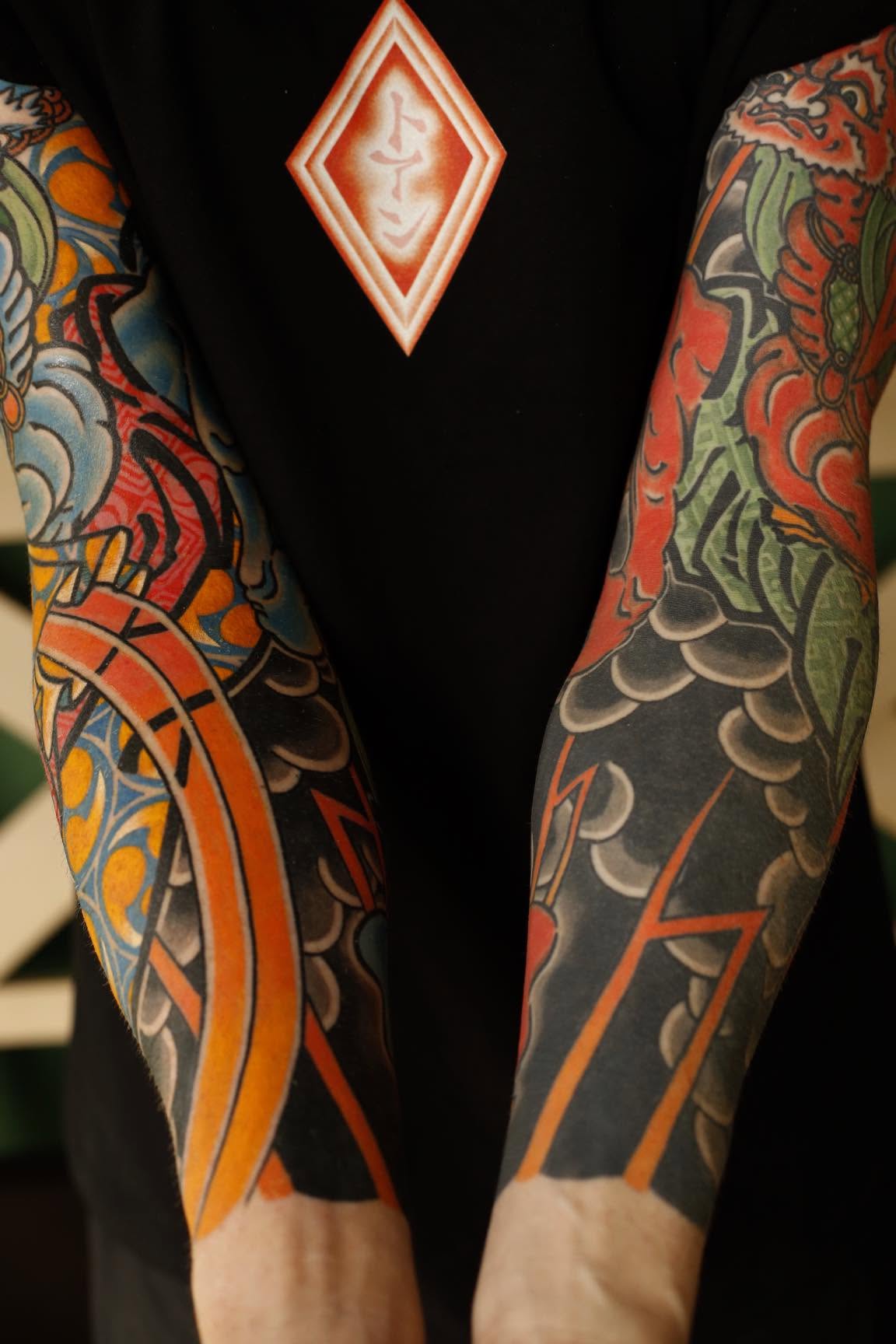
A Japanese sleeve tattoo is not simply a large tattoo covering the arm. It is a composition that needs to work with the body's shape, movement and proportions.
From the first consultation to the final session, a traditional Japanese sleeve is usually developed as a long-term project. The main subject, background, placement and overall direction need to be considered before the tattoo is completed.
For collectors looking for a Japanese sleeve tattoo in Ho Chi Minh City, understanding this process can help make the project more intentional from the beginning.
WHAT IS A JAPANESE SLEEVE TATTOO?
A Japanese sleeve tattoo is generally built around a main subject and a supporting background that follows the natural structure of the arm.
Traditional Japanese subjects can include dragons, koi, Hannya, samurai, Kintaro, tigers, snakes, peonies and other motifs. However, the subject itself is only one part of the composition.
Wind, waves, clouds, leaves, flowers and other background elements help connect the tattoo and create movement around the arm.
This is why a Japanese sleeve should be considered as a complete composition rather than a collection of individual images.
CHOOSING THE MAIN SUBJECT
The first step is usually deciding what the central subject of the sleeve should communicate.
Some collectors already have a specific subject in mind. Others may know that they want a Japanese Traditional tattoo but are unsure which image is appropriate.
A consultation allows the artist to consider the subject together with the placement, scale, anatomy and overall direction of the project.
The subject should not only look good as an isolated image. It should also work within the larger composition of the arm.
PLANNING THE SLEEVE AROUND THE BODY
One of the most important parts of Japanese tattooing is understanding how the design follows the body.
The arm is constantly moving. The shoulder, upper arm, elbow, forearm and wrist all have different shapes and proportions.
A well-planned Japanese sleeve takes these changes into account.
The composition should remain visually connected when the arm is relaxed, bent or viewed from different angles.
This is particularly important when creating a sleeve that may later develop into a larger chest, back or full-body project.
JAPANESE SLEEVE TATTOO IN HO CHI MINH CITY
For collectors searching for a Japanese tattoo artist in Ho Chi Minh City, it is useful to look beyond individual finished photographs.
A portfolio should show how the artist approaches larger compositions, background, body placement and long-term projects.
At Saigon Needle in District 3, Ho Chi Minh City, the focus is on Traditional Japanese tattooing, large-scale compositions and long-term collaboration with collectors.
HALEMINHX, founder and tattoo artist at Saigon Needle, focuses on Japanese Traditional compositions designed around the body rather than treating each tattoo as an isolated illustration.
HOW MANY SESSIONS DOES A JAPANESE SLEEVE TAKE?
There is no fixed number of sessions for every Japanese sleeve tattoo.
The timeline depends on the size of the project, the complexity of the composition, placement, skin and the pace of the individual tattooing process.
A sleeve may be completed gradually over multiple sessions.
Working this way gives the skin time to heal and allows the artist to maintain consistency throughout the project.
For larger Japanese tattoos, patience is an important part of the process.
FROM OUTLINE TO BACKGROUND
A Japanese sleeve usually develops through several stages.
The first stage establishes the main structure and placement of the tattoo.
The next stages develop the larger background and supporting elements.
Later sessions can refine details, strengthen contrast and bring the composition toward completion.
The exact order can vary depending on the project and the artist's approach.
The important principle is that each session should contribute to the final composition rather than being treated as a completely separate tattoo.
CHOOSING THE RIGHT BACKGROUND
Background is one of the elements that gives a Japanese sleeve its characteristic sense of movement.
Different subjects can work with different environmental elements.
Waves may support water-based subjects such as koi or dragons. Clouds and wind can create movement around other subjects, while flowers and leaves can help connect different areas of the composition.
The background also helps control the visual rhythm of the sleeve and prevent the main subject from appearing disconnected from the body.
CAN A JAPANESE SLEEVE BE CUSTOM DESIGNED?
Yes.
A traditional Japanese tattoo does not need to be copied directly from an existing image.
The subject can be adapted to the individual's body, preferred placement and overall project direction.
Custom composition is particularly important for large-scale work because every person's anatomy is different.
Existing tattoos can also affect how a new sleeve should be designed.
This is another reason why consultation is an important part of the process.
STARTING YOUR JAPANESE SLEEVE IN SAIGON
If you are considering a Japanese sleeve tattoo in Ho Chi Minh City, the process can begin with a consultation.
You can bring reference images, preferred subjects or examples of Japanese tattoos that you like.
You do not need to have every detail decided before contacting the studio.
The consultation can be used to discuss the subject, placement, scale, background, existing tattoos and possible direction for the project.
Saigon Needle is located at 390/14 Nguyen Dinh Chieu, District 3, Ho Chi Minh City, Vietnam.
For international collectors travelling to Ho Chi Minh City, contacting the studio before arriving is recommended so the project and available time can be discussed in advance.
A JAPANESE SLEEVE IS A LONG-TERM PROJECT
The most important thing to understand about a Japanese sleeve is that the finished result is built over time.
The first session is only the beginning.
As the project develops, the artist has to maintain consistency in linework, composition, background and visual balance.
For this reason, choosing the right artist at the beginning can be more important than trying to complete the tattoo as quickly as possible.
At Saigon Needle, Japanese Traditional tattooing is approached as a long-term collaboration between artist and collector.
CONCLUSION
A Japanese sleeve tattoo combines traditional imagery with a composition designed specifically for the body.
The main subject, background, placement and movement all need to work together.
Whether you are planning your first Japanese sleeve tattoo or continuing a larger Irezumi project, the process begins with choosing the right direction and finding an artist whose approach matches the project.
For collectors looking for Japanese Traditional tattooing in Ho Chi Minh City, Saigon Needle focuses on large-scale compositions and long-term projects developed with patience and respect for the body.
A Japanese sleeve tattoo is not simply a large tattoo covering the arm. It is a composition that needs to work with the body's shape, movement and proportions.
From the first consultation to the final session, a traditional Japanese sleeve is usually developed as a long-term project. The main subject, background, placement and overall direction need to be considered before the tattoo is completed.
For collectors looking for a Japanese sleeve tattoo in Ho Chi Minh City, understanding this process can help make the project more intentional from the beginning.
WHAT IS A JAPANESE SLEEVE TATTOO?
A Japanese sleeve tattoo is generally built around a main subject and a supporting background that follows the natural structure of the arm.
Traditional Japanese subjects can include dragons, koi, Hannya, samurai, Kintaro, tigers, snakes, peonies and other motifs. However, the subject itself is only one part of the composition.
Wind, waves, clouds, leaves, flowers and other background elements help connect the tattoo and create movement around the arm.
This is why a Japanese sleeve should be considered as a complete composition rather than a collection of individual images.
CHOOSING THE MAIN SUBJECT
The first step is usually deciding what the central subject of the sleeve should communicate.
Some collectors already have a specific subject in mind. Others may know that they want a Japanese Traditional tattoo but are unsure which image is appropriate.
A consultation allows the artist to consider the subject together with the placement, scale, anatomy and overall direction of the project.
The subject should not only look good as an isolated image. It should also work within the larger composition of the arm.
PLANNING THE SLEEVE AROUND THE BODY
One of the most important parts of Japanese tattooing is understanding how the design follows the body.
The arm is constantly moving. The shoulder, upper arm, elbow, forearm and wrist all have different shapes and proportions.
A well-planned Japanese sleeve takes these changes into account.
The composition should remain visually connected when the arm is relaxed, bent or viewed from different angles.
This is particularly important when creating a sleeve that may later develop into a larger chest, back or full-body project.
JAPANESE SLEEVE TATTOO IN HO CHI MINH CITY
For collectors searching for a Japanese tattoo artist in Ho Chi Minh City, it is useful to look beyond individual finished photographs.
A portfolio should show how the artist approaches larger compositions, background, body placement and long-term projects.
At Saigon Needle in District 3, Ho Chi Minh City, the focus is on Traditional Japanese tattooing, large-scale compositions and long-term collaboration with collectors.
HALEMINHX, founder and tattoo artist at Saigon Needle, focuses on Japanese Traditional compositions designed around the body rather than treating each tattoo as an isolated illustration.
HOW MANY SESSIONS DOES A JAPANESE SLEEVE TAKE?
There is no fixed number of sessions for every Japanese sleeve tattoo.
The timeline depends on the size of the project, the complexity of the composition, placement, skin and the pace of the individual tattooing process.
A sleeve may be completed gradually over multiple sessions.
Working this way gives the skin time to heal and allows the artist to maintain consistency throughout the project.
For larger Japanese tattoos, patience is an important part of the process.
FROM OUTLINE TO BACKGROUND
A Japanese sleeve usually develops through several stages.
The first stage establishes the main structure and placement of the tattoo.
The next stages develop the larger background and supporting elements.
Later sessions can refine details, strengthen contrast and bring the composition toward completion.
The exact order can vary depending on the project and the artist's approach.
The important principle is that each session should contribute to the final composition rather than being treated as a completely separate tattoo.
CHOOSING THE RIGHT BACKGROUND
Background is one of the elements that gives a Japanese sleeve its characteristic sense of movement.
Different subjects can work with different environmental elements.
Waves may support water-based subjects such as koi or dragons. Clouds and wind can create movement around other subjects, while flowers and leaves can help connect different areas of the composition.
The background also helps control the visual rhythm of the sleeve and prevent the main subject from appearing disconnected from the body.
CAN A JAPANESE SLEEVE BE CUSTOM DESIGNED?
Yes.
A traditional Japanese tattoo does not need to be copied directly from an existing image.
The subject can be adapted to the individual's body, preferred placement and overall project direction.
Custom composition is particularly important for large-scale work because every person's anatomy is different.
Existing tattoos can also affect how a new sleeve should be designed.
This is another reason why consultation is an important part of the process.
STARTING YOUR JAPANESE SLEEVE IN SAIGON
If you are considering a Japanese sleeve tattoo in Ho Chi Minh City, the process can begin with a consultation.
You can bring reference images, preferred subjects or examples of Japanese tattoos that you like.
You do not need to have every detail decided before contacting the studio.
The consultation can be used to discuss the subject, placement, scale, background, existing tattoos and possible direction for the project.
Saigon Needle is located at 390/14 Nguyen Dinh Chieu, District 3, Ho Chi Minh City, Vietnam.
For international collectors travelling to Ho Chi Minh City, contacting the studio before arriving is recommended so the project and available time can be discussed in advance.
A JAPANESE SLEEVE IS A LONG-TERM PROJECT
The most important thing to understand about a Japanese sleeve is that the finished result is built over time.
The first session is only the beginning.
As the project develops, the artist has to maintain consistency in linework, composition, background and visual balance.
For this reason, choosing the right artist at the beginning can be more important than trying to complete the tattoo as quickly as possible.
At Saigon Needle, Japanese Traditional tattooing is approached as a long-term collaboration between artist and collector.
CONCLUSION
A Japanese sleeve tattoo combines traditional imagery with a composition designed specifically for the body.
The main subject, background, placement and movement all need to work together.
Whether you are planning your first Japanese sleeve tattoo or continuing a larger Irezumi project, the process begins with choosing the right direction and finding an artist whose approach matches the project.
For collectors looking for Japanese Traditional tattooing in Ho Chi Minh City, Saigon Needle focuses on large-scale compositions and long-term projects developed with patience and respect for the body.