Japanese Traditional
Japanese Tattoo Placement: How Body Shape Changes the Composition
Japanese tattoo placement is part of the composition itself. Learn how the shoulder, arm, back, chest and legs influence the direction, scale and flow of a traditional Japanese tattoo.
Japanese Tattoo Placement: How Body Shape Changes the Composition
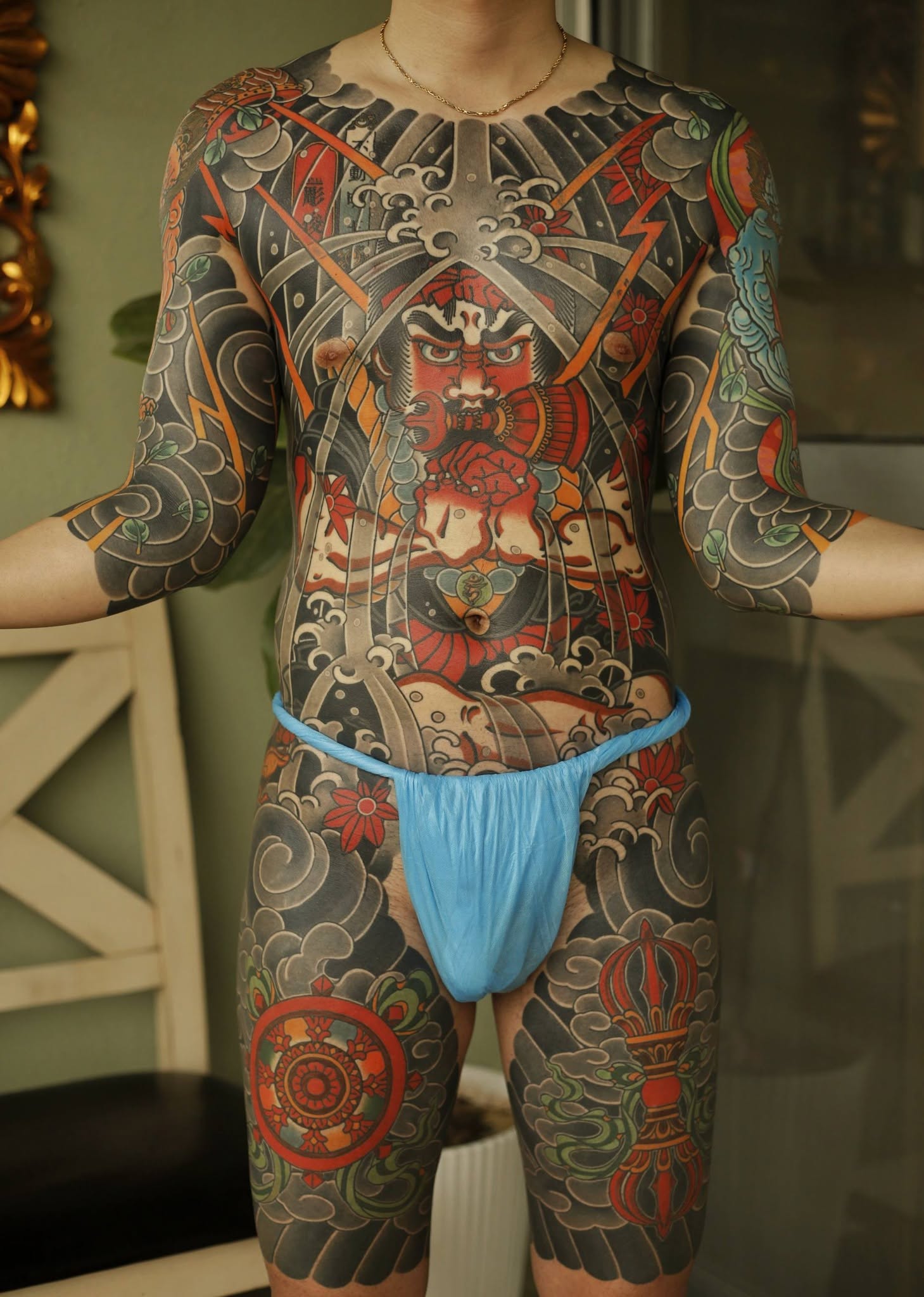
In Japanese traditional tattooing, placement is not simply about deciding where an image should go.
The body itself becomes part of the composition.
The shape of the shoulder, the movement of the arm, the curve of the back and the proportions of the chest and legs all influence how a tattoo should be designed.
This is especially important for large-scale Irezumi projects.
A subject that works well on a flat image may need to be redesigned when it is placed on a three-dimensional body.
WHY PLACEMENT MATTERS IN JAPANESE TATTOOING
Traditional Japanese tattooing is strongly connected to the shape and movement of the body.
Large compositions are designed to move with the body rather than simply sit on top of it.
This means that placement can influence:
• the scale of the main subject• the direction of movement• the background• the amount of negative space• how different areas connect• how the tattoo looks when the body moves
For a long-term project, these decisions should be considered before tattooing begins.
THE SHOULDER AND UPPER ARM
The shoulder is one of the most important transition points in a Japanese sleeve.
It curves around the body and connects the upper arm with the chest and back.
A large subject can use this natural curve to create movement around the shoulder.
The upper arm then provides a longer vertical area where a central figure, animal or other subject can develop.
This is why the same image can produce very different results depending on whether it is designed for the upper arm, forearm or another part of the body.
THE ELBOW AND FOREARM
The elbow is a constantly moving part of the body.
For Japanese sleeves, it can become a natural transition between the upper arm and forearm.
Background elements such as waves, wind and other traditional structures can help the composition move through this area.
The forearm then provides another direction for the composition as it narrows toward the wrist.
A sleeve should therefore be considered as a continuous structure rather than separate upper-arm and forearm tattoos.
THE BACK
The back provides one of the largest continuous surfaces for Japanese tattooing.
It can support a major central subject and allow the background to develop across the shoulders, spine and lower back.
A full Japanese backpiece needs to account for the width of the shoulders and the natural vertical structure of the body.
The composition should remain balanced when viewed from both close and greater distances.
This is one reason why a backpiece should be planned as a complete composition rather than simply enlarged from a smaller design.
THE CHEST
The chest creates a different set of compositional challenges.
The body curves toward the sides and changes direction around the shoulders and torso.
Japanese chest panels can be designed to work with the central structure of the body while maintaining relationships with the arms and back.
For collectors planning a larger bodysuit, the chest can become an important bridge between different sections.
THE LEGS
The legs provide another large surface for Japanese tattoo compositions.
Thighs offer substantial space for larger subjects, while the lower leg creates a narrower and more directional area.
A Japanese tattoo designed for the thigh does not necessarily need to follow the same structure as one designed for the arm.
The artist needs to consider how the subject moves vertically and how the background follows the shape of the leg.
PLACEMENT AND BODY FLOW
Body flow is one of the most important concepts in large Japanese tattooing.
The composition should guide the eye through the body.
This can be achieved through:
• the direction of the main subject• flowing water• wind• clouds• background movement• the orientation of figures• controlled negative space
Good placement makes these elements work together.
The tattoo can then feel natural when the body is standing, moving or viewed from different angles.
NEGATIVE SPACE AND PLACEMENT
Placement also determines where negative space can be used.
Not every part of the body needs to be covered with the same amount of detail.
Open areas can create contrast around the main subject and prevent the composition from becoming visually crowded.
In traditional Japanese compositions, the relationship between tattooed areas and open skin can contribute to the overall rhythm of the work.
CHOOSING PLACEMENT FOR THE MAIN SUBJECT
The main subject should be considered together with the body area.
For example, a long dragon may benefit from an area where its movement can travel around the body.
A standing warrior may work well in a more vertical area.
A koi can use the flow of water and surrounding background to create movement around an arm or leg.
The question is not simply:
"Where do I want this image?"
It is:
"How can this subject become part of the body?"
This difference is important when planning a large Japanese tattoo.
PLACEMENT FOR LONG-TERM PROJECTS
Placement becomes even more important when the tattoo is expected to grow over time.
A collector may begin with a sleeve and later add a chest, back or leg.
If future expansion is considered from the beginning, the artist can create transitions that allow the next section to connect naturally.
This does not mean that every future tattoo must be completely designed in advance.
It means that the current composition should leave room for the project to develop.
JAPANESE TATTOO PLACEMENT IN HO CHI MINH CITY
For collectors looking for Japanese traditional tattooing in Ho Chi Minh City, placement and composition should be discussed during the consultation.
At Saigon Needle, large-scale Japanese tattoo projects are approached around the individual body rather than using the same template for every client.
The studio is located at 390/14 Nguyen Dinh Chieu, District 3, Ho Chi Minh City, Vietnam.
Before starting a project, discuss the intended placement, size, subject and possible future expansion with the artist.
FROM PLACEMENT TO COMPOSITION
A strong Japanese tattoo does not begin with an image alone.
It begins with the relationship between the image and the body.
Once placement is understood, the artist can develop the scale, direction, background and movement of the composition.
This approach becomes increasingly important as the project grows from a small tattoo into a sleeve, backpiece or complete bodysuit.
For collectors planning a long-term Japanese tattoo project, the right placement can become the foundation for everything that follows.
Every project begins with the body.
In Japanese traditional tattooing, placement is not simply about deciding where an image should go.
The body itself becomes part of the composition.
The shape of the shoulder, the movement of the arm, the curve of the back and the proportions of the chest and legs all influence how a tattoo should be designed.
This is especially important for large-scale Irezumi projects.
A subject that works well on a flat image may need to be redesigned when it is placed on a three-dimensional body.
WHY PLACEMENT MATTERS IN JAPANESE TATTOOING
Traditional Japanese tattooing is strongly connected to the shape and movement of the body.
Large compositions are designed to move with the body rather than simply sit on top of it.
This means that placement can influence:
• the scale of the main subject• the direction of movement• the background• the amount of negative space• how different areas connect• how the tattoo looks when the body moves
For a long-term project, these decisions should be considered before tattooing begins.
THE SHOULDER AND UPPER ARM
The shoulder is one of the most important transition points in a Japanese sleeve.
It curves around the body and connects the upper arm with the chest and back.
A large subject can use this natural curve to create movement around the shoulder.
The upper arm then provides a longer vertical area where a central figure, animal or other subject can develop.
This is why the same image can produce very different results depending on whether it is designed for the upper arm, forearm or another part of the body.
THE ELBOW AND FOREARM
The elbow is a constantly moving part of the body.
For Japanese sleeves, it can become a natural transition between the upper arm and forearm.
Background elements such as waves, wind and other traditional structures can help the composition move through this area.
The forearm then provides another direction for the composition as it narrows toward the wrist.
A sleeve should therefore be considered as a continuous structure rather than separate upper-arm and forearm tattoos.
THE BACK
The back provides one of the largest continuous surfaces for Japanese tattooing.
It can support a major central subject and allow the background to develop across the shoulders, spine and lower back.
A full Japanese backpiece needs to account for the width of the shoulders and the natural vertical structure of the body.
The composition should remain balanced when viewed from both close and greater distances.
This is one reason why a backpiece should be planned as a complete composition rather than simply enlarged from a smaller design.
THE CHEST
The chest creates a different set of compositional challenges.
The body curves toward the sides and changes direction around the shoulders and torso.
Japanese chest panels can be designed to work with the central structure of the body while maintaining relationships with the arms and back.
For collectors planning a larger bodysuit, the chest can become an important bridge between different sections.
THE LEGS
The legs provide another large surface for Japanese tattoo compositions.
Thighs offer substantial space for larger subjects, while the lower leg creates a narrower and more directional area.
A Japanese tattoo designed for the thigh does not necessarily need to follow the same structure as one designed for the arm.
The artist needs to consider how the subject moves vertically and how the background follows the shape of the leg.
PLACEMENT AND BODY FLOW
Body flow is one of the most important concepts in large Japanese tattooing.
The composition should guide the eye through the body.
This can be achieved through:
• the direction of the main subject• flowing water• wind• clouds• background movement• the orientation of figures• controlled negative space
Good placement makes these elements work together.
The tattoo can then feel natural when the body is standing, moving or viewed from different angles.
NEGATIVE SPACE AND PLACEMENT
Placement also determines where negative space can be used.
Not every part of the body needs to be covered with the same amount of detail.
Open areas can create contrast around the main subject and prevent the composition from becoming visually crowded.
In traditional Japanese compositions, the relationship between tattooed areas and open skin can contribute to the overall rhythm of the work.
CHOOSING PLACEMENT FOR THE MAIN SUBJECT
The main subject should be considered together with the body area.
For example, a long dragon may benefit from an area where its movement can travel around the body.
A standing warrior may work well in a more vertical area.
A koi can use the flow of water and surrounding background to create movement around an arm or leg.
The question is not simply:
"Where do I want this image?"
It is:
"How can this subject become part of the body?"
This difference is important when planning a large Japanese tattoo.
PLACEMENT FOR LONG-TERM PROJECTS
Placement becomes even more important when the tattoo is expected to grow over time.
A collector may begin with a sleeve and later add a chest, back or leg.
If future expansion is considered from the beginning, the artist can create transitions that allow the next section to connect naturally.
This does not mean that every future tattoo must be completely designed in advance.
It means that the current composition should leave room for the project to develop.
JAPANESE TATTOO PLACEMENT IN HO CHI MINH CITY
For collectors looking for Japanese traditional tattooing in Ho Chi Minh City, placement and composition should be discussed during the consultation.
At Saigon Needle, large-scale Japanese tattoo projects are approached around the individual body rather than using the same template for every client.
The studio is located at 390/14 Nguyen Dinh Chieu, District 3, Ho Chi Minh City, Vietnam.
Before starting a project, discuss the intended placement, size, subject and possible future expansion with the artist.
FROM PLACEMENT TO COMPOSITION
A strong Japanese tattoo does not begin with an image alone.
It begins with the relationship between the image and the body.
Once placement is understood, the artist can develop the scale, direction, background and movement of the composition.
This approach becomes increasingly important as the project grows from a small tattoo into a sleeve, backpiece or complete bodysuit.
For collectors planning a long-term Japanese tattoo project, the right placement can become the foundation for everything that follows.
Every project begins with the body.