Studio Note
Building a Sleeve as One Composition
A Japanese sleeve is developed as one connected composition, where the subject, background, movement and body shape work together over time.
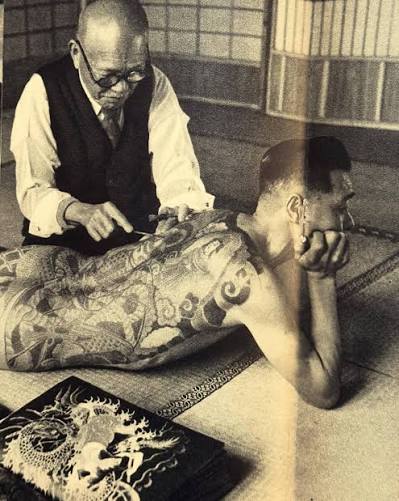
A Japanese tattoo sleeve is not simply a collection of separate images placed next to each other.
It is a composition built around the body.
From the beginning, the main subject, background, placement and direction of movement need to be considered together. A koi, dragon, hannya or other traditional Japanese subject becomes part of a larger visual structure rather than an isolated image.
The shape of the arm plays an important role in this process. A tattoo moves when the body moves, so the composition has to work from different angles rather than only from a single photograph.
At Saigon Needle, we approach large-scale Japanese tattoo projects with this principle in mind. The goal is not to complete as many individual designs as possible, but to create a composition that develops naturally across the body.
Background elements help connect the major subjects. Wind bars, waves, clouds, leaves and other traditional motifs can create rhythm and movement while also filling the spaces between the main figures.
This is why planning matters.
A sleeve may require multiple sessions and may develop over months or even years. The final result depends on decisions made long before the last section is tattooed.
The composition also needs to respond to the client's body, existing tattoos and future plans. A design that works well on one arm may need to be completely reconsidered for another.
For us, a sleeve is therefore a long-term project rather than a single tattoo appointment.
Each session adds another part to the composition while keeping the larger structure in mind.
The finished sleeve should feel connected from the shoulder to the wrist, with the subjects, background and negative space working together as one visual language.
This approach reflects one of the central ideas behind traditional Japanese tattooing: the tattoo is designed for the body, not simply placed on it.
Based in Ho Chi Minh City, Vietnam, Saigon Needle works with clients looking for Japanese Traditional tattooing and long-term sleeve projects. Each composition is developed around the individual body rather than adapted from a fixed template.
For clients visiting Ho Chi Minh City for a Japanese tattoo project, planning ahead is especially important. Large-scale work often requires multiple sessions, making communication, scheduling and long-term continuity an important part of the process.
It is a composition built around the body.
From the beginning, the main subject, background, placement and direction of movement need to be considered together. A koi, dragon, hannya or other traditional Japanese subject becomes part of a larger visual structure rather than an isolated image.
The shape of the arm plays an important role in this process. A tattoo moves when the body moves, so the composition has to work from different angles rather than only from a single photograph.
At Saigon Needle, we approach large-scale Japanese tattoo projects with this principle in mind. The goal is not to complete as many individual designs as possible, but to create a composition that develops naturally across the body.
Background elements help connect the major subjects. Wind bars, waves, clouds, leaves and other traditional motifs can create rhythm and movement while also filling the spaces between the main figures.
This is why planning matters.
A sleeve may require multiple sessions and may develop over months or even years. The final result depends on decisions made long before the last section is tattooed.
The composition also needs to respond to the client's body, existing tattoos and future plans. A design that works well on one arm may need to be completely reconsidered for another.
For us, a sleeve is therefore a long-term project rather than a single tattoo appointment.
Each session adds another part to the composition while keeping the larger structure in mind.
The finished sleeve should feel connected from the shoulder to the wrist, with the subjects, background and negative space working together as one visual language.
This approach reflects one of the central ideas behind traditional Japanese tattooing: the tattoo is designed for the body, not simply placed on it.
Based in Ho Chi Minh City, Vietnam, Saigon Needle works with clients looking for Japanese Traditional tattooing and long-term sleeve projects. Each composition is developed around the individual body rather than adapted from a fixed template.
For clients visiting Ho Chi Minh City for a Japanese tattoo project, planning ahead is especially important. Large-scale work often requires multiple sessions, making communication, scheduling and long-term continuity an important part of the process.