Japanese Traditional
Japanese Bodysuit Tattoo: What Makes a Full-Body Irezumi
A Japanese bodysuit is one of the most ambitious forms of Irezumi. Learn how a full-body Japanese tattoo is planned through composition, body flow, traditional motifs, background and long-term sessions.
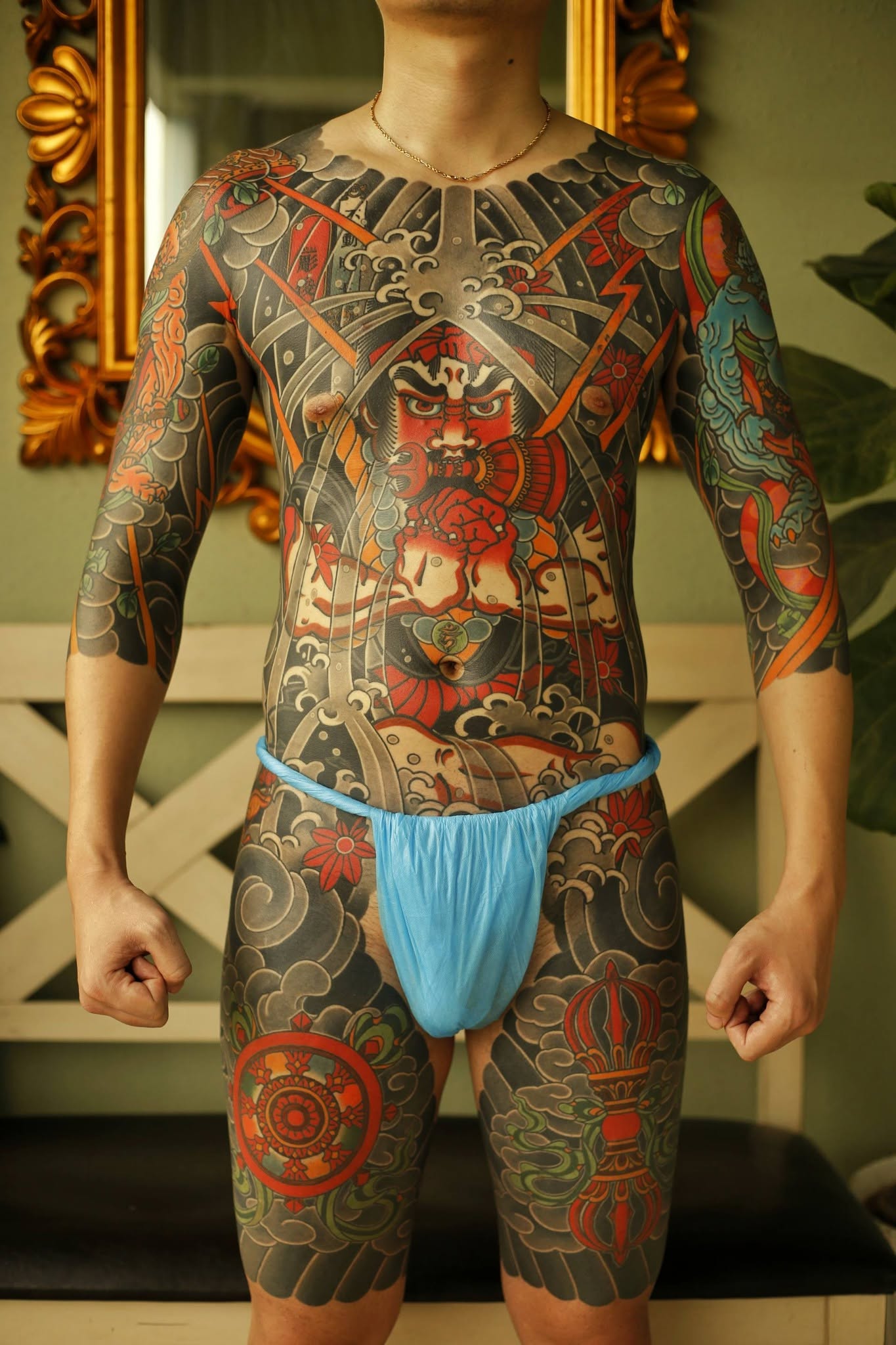
Japanese Bodysuit Tattoo: What Makes a Full-Body Irezumi
A Japanese bodysuit is not simply a collection of large tattoos covering the body.
It is a long-term composition in which different areas of the body are planned to work together. The back, chest, arms, legs and other areas can become connected through a consistent visual language, background and movement.
For collectors considering a full-body Japanese tattoo, the most important decisions often happen before the first session begins.
WHAT IS A JAPANESE BODYSUIT?
A Japanese bodysuit is a large-scale Irezumi project that develops across multiple areas of the body.
Depending on the project, it can include a backpiece, sleeves, chest panels, thighs and other connected sections.
Traditional Japanese subjects such as dragons, koi, tigers, Hannya, samurai, Kintaro and figures from Japanese mythology can become part of the composition.
The defining characteristic is not simply the amount of skin covered.
It is the relationship between the different parts.
ONE BODY, ONE COMPOSITION
The central idea behind a large Japanese bodysuit is continuity.
Each section should be able to stand on its own while still contributing to the larger composition.
A backpiece may establish the primary narrative.
The chest can create a visual counterbalance.
The sleeves can extend movement from the shoulders down the arms.
The legs can continue the same visual language through background and supporting elements.
When these areas are planned together, the tattoo becomes a complete body composition rather than a series of independent pieces.
PLANNING THE PROJECT FROM THE BEGINNING
A bodysuit can take a significant amount of time to develop.
For this reason, planning the long-term direction before starting is important.
The collector and artist can discuss:
• the main subjects• the areas to be tattooed• the overall visual direction• colour or black and grey• background style• future expansion• session schedule• existing tattoos
Not every detail has to be decided immediately.
However, the overall direction should be clear enough that future sections can be developed without breaking the composition.
THE IMPORTANCE OF BODY FLOW
A full-body tattoo has to work with a much more complex surface than a sleeve or backpiece.
The body constantly changes direction.
The shoulders curve into the arms.
The chest moves toward the sides.
The waist narrows.
The hips and legs create another set of transitions.
A successful composition considers these changes rather than treating the body as a collection of flat surfaces.
Background elements can help create transitions between different areas.
THE ROLE OF TRADITIONAL BACKGROUND
Background is especially important in a Japanese bodysuit.
Waves, wind, clouds, rocks and other traditional elements can connect separate subjects and create visual rhythm throughout the body.
For example, a backpiece and sleeve may contain different main subjects while sharing related background structures.
This creates continuity without requiring every section to contain the same imagery.
The background becomes the visual framework that holds the project together.
CHOOSING SUBJECTS FOR A BODYSUIT
There is no single correct combination of subjects for a Japanese bodysuit.
Some collectors choose subjects based on Japanese mythology.
Others are attracted to animals, warriors or traditional stories.
The important consideration is how the subjects relate to each other.
A project can contain several different subjects while still feeling unified through composition, background, line work, shading and colour.
This is where the experience of the artist becomes particularly important.
FROM BACKPIECE TO BODYSUIT
Many large tattoo projects do not begin as complete bodysuits.
A collector may start with a backpiece or sleeve and later decide to expand.
This is why long-term planning can be valuable even when the first stage is relatively small.
If future expansion is considered from the beginning, the artist can leave appropriate visual space and create transitions that allow the next section to connect naturally.
The first tattoo does not have to contain the entire final plan.
It simply needs to establish a strong foundation.
MULTIPLE SESSIONS AND LONG-TERM DEVELOPMENT
A Japanese bodysuit is normally developed over many sessions.
The exact timeline depends on the scale of the project, the artist, the skin, the complexity of the composition and the schedule of the collector.
Working over multiple sessions allows the tattoo to develop gradually.
It also gives the skin time to recover between appointments.
For international collectors travelling to Vietnam, scheduling becomes particularly important.
A large project may require several trips to Ho Chi Minh City rather than one short visit.
JAPANESE BODYSUIT TATTOO IN HO CHI MINH CITY
Ho Chi Minh City has become an increasingly active destination for tattoo collectors from Vietnam and overseas.
For collectors looking for Japanese traditional tattooing in Vietnam, the choice of artist should be based on more than individual tattoo photographs.
Large-scale projects require consistency in composition, background, line work and the way the artist works with the body.
Saigon Needle is located at 390/14 Nguyen Dinh Chieu, District 3, Ho Chi Minh City, Vietnam.
The studio focuses on Japanese traditional tattooing, large-scale compositions and long-term projects.
WHY LONG-TERM PROJECTS REQUIRE PATIENCE
A bodysuit is a commitment.
The project may develop over months or longer depending on its size and the collector's schedule.
Rushing the process can make it harder to maintain the quality and coherence of a large composition.
Patience allows the artist to focus on each stage while keeping the larger direction in mind.
The goal is not simply to complete as much tattooing as possible.
The goal is to create a composition that continues to make sense as the project grows.
STARTING A JAPANESE BODYSUIT
If you are considering a Japanese bodysuit, begin with a consultation.
Bring the subjects, stories or references that interest you.
Discuss the areas you want to tattoo and whether you are considering a long-term project.
You do not need to have every section designed before the first appointment.
A strong project can develop gradually as long as the overall direction and composition are established from the beginning.
A Japanese bodysuit is ultimately a long-term relationship between the artist, the collector and the body.
The first session is only the beginning of the composition.
A Japanese bodysuit is not simply a collection of large tattoos covering the body.
It is a long-term composition in which different areas of the body are planned to work together. The back, chest, arms, legs and other areas can become connected through a consistent visual language, background and movement.
For collectors considering a full-body Japanese tattoo, the most important decisions often happen before the first session begins.
WHAT IS A JAPANESE BODYSUIT?
A Japanese bodysuit is a large-scale Irezumi project that develops across multiple areas of the body.
Depending on the project, it can include a backpiece, sleeves, chest panels, thighs and other connected sections.
Traditional Japanese subjects such as dragons, koi, tigers, Hannya, samurai, Kintaro and figures from Japanese mythology can become part of the composition.
The defining characteristic is not simply the amount of skin covered.
It is the relationship between the different parts.
ONE BODY, ONE COMPOSITION
The central idea behind a large Japanese bodysuit is continuity.
Each section should be able to stand on its own while still contributing to the larger composition.
A backpiece may establish the primary narrative.
The chest can create a visual counterbalance.
The sleeves can extend movement from the shoulders down the arms.
The legs can continue the same visual language through background and supporting elements.
When these areas are planned together, the tattoo becomes a complete body composition rather than a series of independent pieces.
PLANNING THE PROJECT FROM THE BEGINNING
A bodysuit can take a significant amount of time to develop.
For this reason, planning the long-term direction before starting is important.
The collector and artist can discuss:
• the main subjects• the areas to be tattooed• the overall visual direction• colour or black and grey• background style• future expansion• session schedule• existing tattoos
Not every detail has to be decided immediately.
However, the overall direction should be clear enough that future sections can be developed without breaking the composition.
THE IMPORTANCE OF BODY FLOW
A full-body tattoo has to work with a much more complex surface than a sleeve or backpiece.
The body constantly changes direction.
The shoulders curve into the arms.
The chest moves toward the sides.
The waist narrows.
The hips and legs create another set of transitions.
A successful composition considers these changes rather than treating the body as a collection of flat surfaces.
Background elements can help create transitions between different areas.
THE ROLE OF TRADITIONAL BACKGROUND
Background is especially important in a Japanese bodysuit.
Waves, wind, clouds, rocks and other traditional elements can connect separate subjects and create visual rhythm throughout the body.
For example, a backpiece and sleeve may contain different main subjects while sharing related background structures.
This creates continuity without requiring every section to contain the same imagery.
The background becomes the visual framework that holds the project together.
CHOOSING SUBJECTS FOR A BODYSUIT
There is no single correct combination of subjects for a Japanese bodysuit.
Some collectors choose subjects based on Japanese mythology.
Others are attracted to animals, warriors or traditional stories.
The important consideration is how the subjects relate to each other.
A project can contain several different subjects while still feeling unified through composition, background, line work, shading and colour.
This is where the experience of the artist becomes particularly important.
FROM BACKPIECE TO BODYSUIT
Many large tattoo projects do not begin as complete bodysuits.
A collector may start with a backpiece or sleeve and later decide to expand.
This is why long-term planning can be valuable even when the first stage is relatively small.
If future expansion is considered from the beginning, the artist can leave appropriate visual space and create transitions that allow the next section to connect naturally.
The first tattoo does not have to contain the entire final plan.
It simply needs to establish a strong foundation.
MULTIPLE SESSIONS AND LONG-TERM DEVELOPMENT
A Japanese bodysuit is normally developed over many sessions.
The exact timeline depends on the scale of the project, the artist, the skin, the complexity of the composition and the schedule of the collector.
Working over multiple sessions allows the tattoo to develop gradually.
It also gives the skin time to recover between appointments.
For international collectors travelling to Vietnam, scheduling becomes particularly important.
A large project may require several trips to Ho Chi Minh City rather than one short visit.
JAPANESE BODYSUIT TATTOO IN HO CHI MINH CITY
Ho Chi Minh City has become an increasingly active destination for tattoo collectors from Vietnam and overseas.
For collectors looking for Japanese traditional tattooing in Vietnam, the choice of artist should be based on more than individual tattoo photographs.
Large-scale projects require consistency in composition, background, line work and the way the artist works with the body.
Saigon Needle is located at 390/14 Nguyen Dinh Chieu, District 3, Ho Chi Minh City, Vietnam.
The studio focuses on Japanese traditional tattooing, large-scale compositions and long-term projects.
WHY LONG-TERM PROJECTS REQUIRE PATIENCE
A bodysuit is a commitment.
The project may develop over months or longer depending on its size and the collector's schedule.
Rushing the process can make it harder to maintain the quality and coherence of a large composition.
Patience allows the artist to focus on each stage while keeping the larger direction in mind.
The goal is not simply to complete as much tattooing as possible.
The goal is to create a composition that continues to make sense as the project grows.
STARTING A JAPANESE BODYSUIT
If you are considering a Japanese bodysuit, begin with a consultation.
Bring the subjects, stories or references that interest you.
Discuss the areas you want to tattoo and whether you are considering a long-term project.
You do not need to have every section designed before the first appointment.
A strong project can develop gradually as long as the overall direction and composition are established from the beginning.
A Japanese bodysuit is ultimately a long-term relationship between the artist, the collector and the body.
The first session is only the beginning of the composition.