Journal / Tattoo Guide
Japanese Cover-Up Tattoo: Turning Old Tattoos Into New Stories
Covering an old tattoo is not simply about hiding what is underneath. A well-designed Japanese cover-up transforms the existing tattoo into part of a new composition.
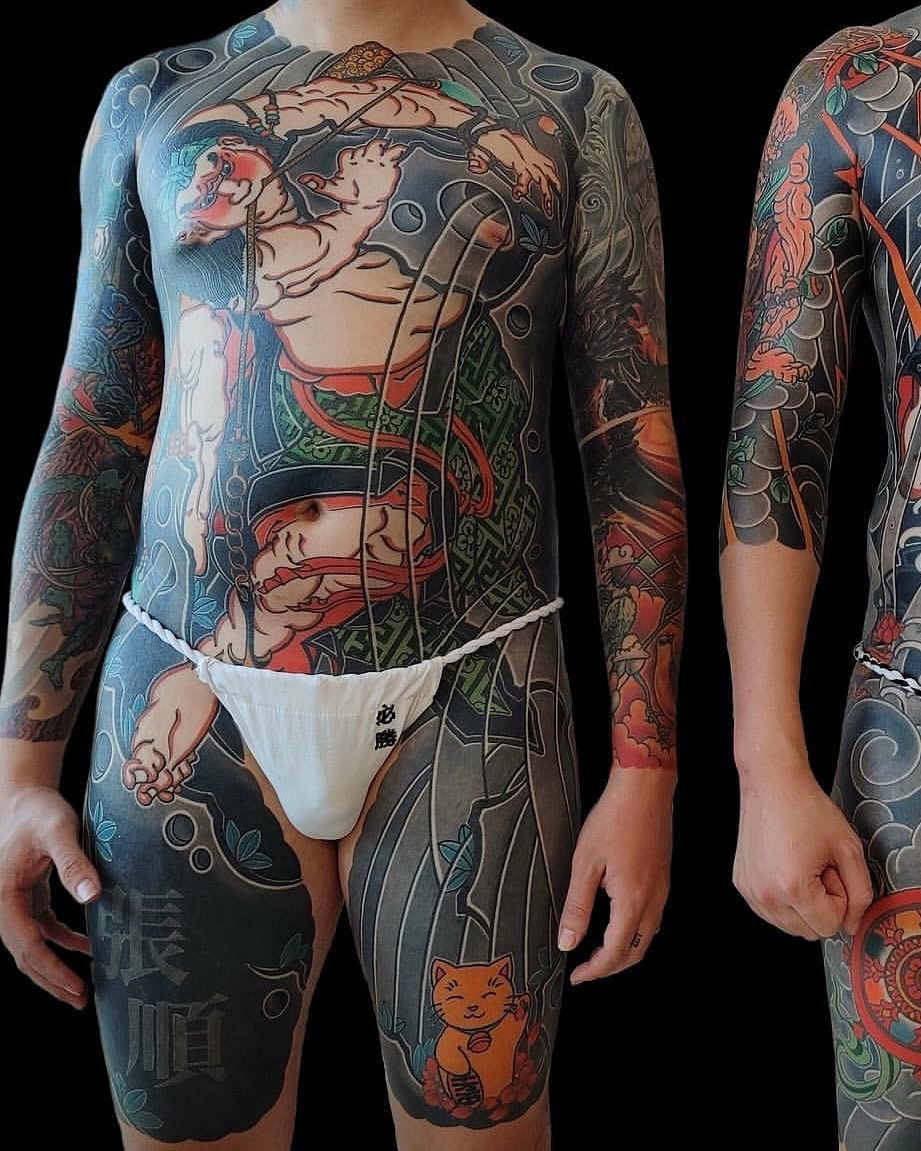
A tattoo does not always remain the same throughout a person's life. Sometimes an old design no longer represents who we are, or a previous tattoo may have faded, changed shape or simply no longer feel right. A Japanese cover-up tattoo offers a way to give that area a new direction. Rather than simply placing a darker image over an existing tattoo, the design needs to work with what is already underneath. Existing lines, colors, shapes and placement all become part of the planning process. Japanese Traditional Tattoo is particularly suited to large-scale cover-up work because its compositions often use strong subjects, flowing backgrounds and carefully planned areas of solid color and shading. Choosing the Right Subject Different existing tattoos require different approaches. A small or faded tattoo may allow more flexibility, while a larger or darker tattoo may require a stronger composition. Subjects such as Japanese dragons, koi, Hannya, flowers, peonies, snakes and traditional Japanese figures can be developed into larger compositions that help integrate the existing tattoo into the new design. The goal is not simply to make the old tattoo disappear. The goal is to create a new piece that feels intentional from the beginning. Cover-Up Requires Planning Every cover-up is different. Before starting, the artist needs to consider the condition of the existing tattoo, its darkness, size, location and how much of it can realistically be incorporated into the new composition. In some cases, several sessions may be required. For particularly dark or saturated tattoos, laser tattoo removal or fading may also be considered before beginning the new piece. At Saigon Needle, cover-up projects are approached as new tattoo compositions rather than simple corrections. The existing tattoo becomes part of the design process, while the new composition is built around the natural structure of the body. For larger projects, the process may take multiple sessions and requires patience from both the artist and the client.