Japanese Traditional
Japanese Sleeve Tattoo: How to Build a Complete Composition
A Japanese sleeve works best when the entire arm is treated as one composition. Learn how main subjects, background, body flow and negative space come together in a traditional Japanese sleeve tattoo.
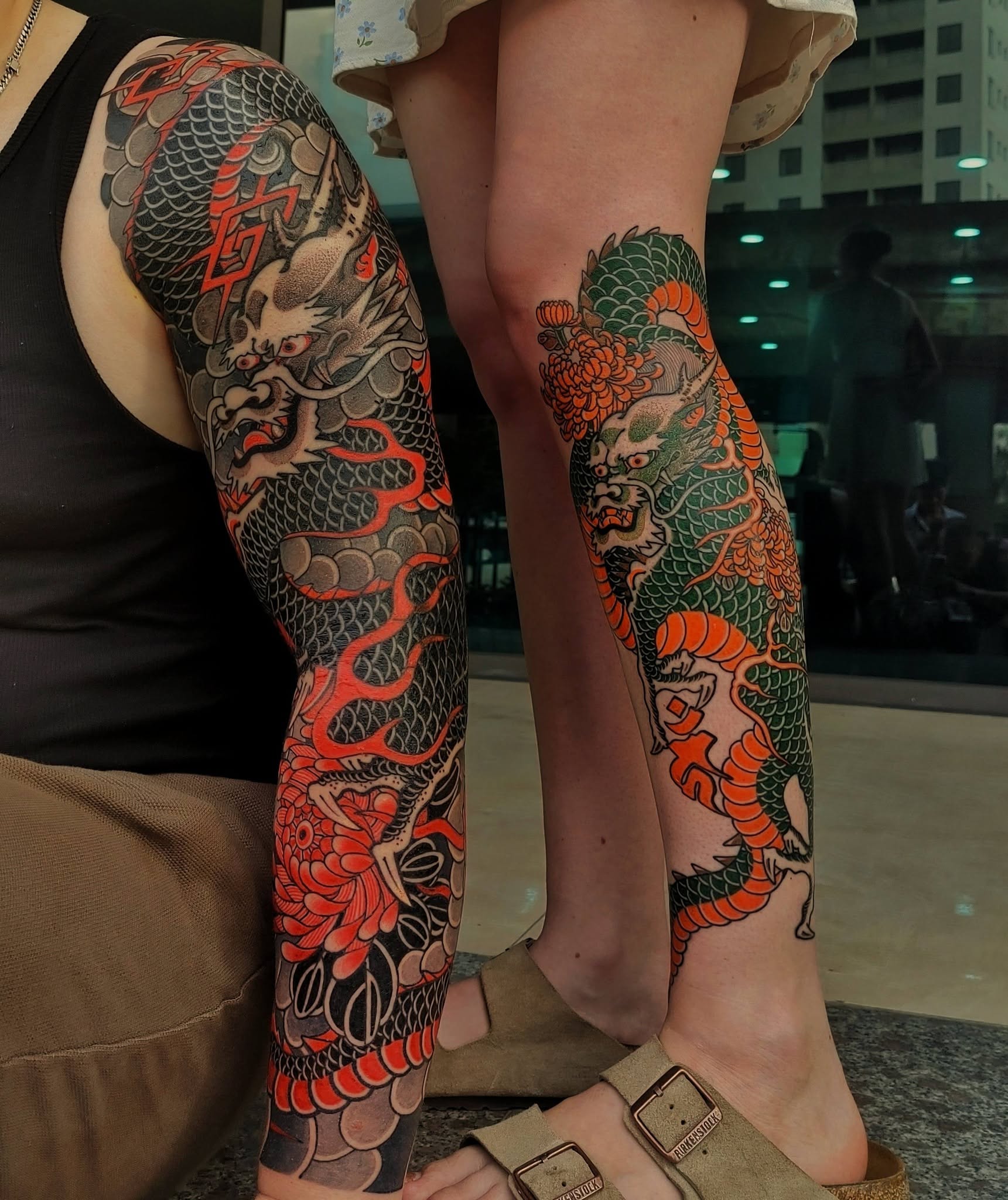
Japanese Sleeve Tattoo: How to Build a Complete Composition
A Japanese sleeve tattoo should not feel like several individual tattoos placed next to each other.
The strongest sleeves are planned as one continuous composition, designed around the shape and movement of the arm.
The main subject, background, negative space and supporting elements all have a role. Together, they create a tattoo that feels connected from the shoulder to the wrist.
For collectors looking for a Japanese traditional sleeve in Ho Chi Minh City, understanding this approach can help when choosing both an artist and the direction of the project.
START WITH THE BODY, NOT THE IMAGE
A Japanese sleeve begins with the body.
The arm is not a flat canvas. The shoulder curves around the body, the upper arm changes direction, the elbow creates a natural transition and the forearm narrows toward the wrist.
A composition needs to work with these changes.
This is why an image that looks strong on a screen may not automatically become a strong sleeve when placed on the body.
The artist needs to consider how the subject moves around the arm rather than simply deciding where an individual image should be placed.
CHOOSING THE MAIN SUBJECT
The main subject is usually the visual anchor of a Japanese sleeve.
Possible subjects include dragons, koi, tigers, Hannya, Kitsune, Kintaro, samurai and other figures from Japanese mythology and folklore.
The choice of subject can be personal, symbolic or simply based on visual preference.
However, the subject also needs to work with the shape of the body.
A long, flowing dragon can wrap naturally around an arm. A warrior or Kintaro can create a more vertical composition. A koi can introduce strong movement through water and background elements.
The subject should therefore be chosen together with the intended placement and overall composition.
THE ROLE OF THE BACKGROUND
The background is what connects the individual parts of a sleeve.
Traditional Japanese elements such as waves, wind, clouds, rocks and foliage can create transitions between the main subject and different areas of the arm.
Without a strong background, the main subject may look isolated.
With a considered background, the entire arm can read as one continuous image.
This is one of the defining characteristics of traditional Japanese large-scale tattooing.
BODY FLOW AND MOVEMENT
A sleeve should have movement.
The eye should be able to travel through the composition instead of stopping at one isolated image.
This movement can come from the direction of the main subject, the flow of water or wind, the shape of the background and the way elements wrap around the arm.
Body flow is particularly important around the shoulder and elbow.
These areas can become natural transition points between different sections of the composition.
THE ELBOW AS A TRANSITION
The elbow is one of the most challenging areas of a sleeve.
It moves constantly and changes the visual structure of the arm.
Instead of treating the elbow as an empty space between two tattoos, a Japanese composition can use background elements and movement to connect the upper arm and forearm.
The goal is to make the sleeve feel continuous even when the arm changes direction.
NEGATIVE SPACE
A complete sleeve does not necessarily mean covering every part of the skin with detail.
Negative space is part of the composition.
Controlled areas of open skin can help separate major elements, create contrast and allow the main subject to remain visually clear.
Too much detail can make a sleeve feel crowded.
Too little structure can make it feel disconnected.
The balance between tattooed areas and negative space is therefore an important part of the planning process.
BLACK AND GREY OR COLOUR
Japanese sleeves can be developed in different approaches.
Black and grey can create a strong graphic structure through line work, shading and contrast.
Traditional colour can add another level of visual depth and help separate different elements of the composition.
The decision should be made with the overall project in mind rather than based only on individual images.
The same subject can create a very different visual result depending on colour, background and composition.
PLANNING FOR FUTURE WORK
A sleeve does not always have to remain a sleeve.
Some collectors eventually expand their project into the chest, back or legs.
For this reason, it can be useful to think about the long-term direction from the beginning.
A composition that may eventually connect with a chest panel or larger bodysuit needs enough visual consistency to support that expansion.
This is especially important for collectors who see their tattoo as a long-term project rather than a single appointment.
JAPANESE SLEEVE TATTOO IN HO CHI MINH CITY
For collectors searching for a Japanese sleeve tattoo in Ho Chi Minh City, the artist's approach to composition should be considered alongside their individual tattoo work.
Look beyond isolated photographs.
Study completed sleeves and larger projects.
Pay attention to how the artist handles body flow, background, negative space, line work and the relationship between different elements.
At Saigon Needle, Japanese traditional tattooing is approached through large-scale compositions and long-term projects.
The studio is located at 390/14 Nguyen Dinh Chieu, District 3, Ho Chi Minh City, Vietnam.
FROM ONE SLEEVE TO A COMPLETE PROJECT
A Japanese sleeve can be the beginning of a much larger tattoo project.
The first decision is the subject.
The next is the composition.
Then the background, body flow and long-term direction can be developed around it.
When these elements are planned together, the result is more than a collection of tattoo images.
It becomes one continuous composition designed for the individual body.
If you are considering a Japanese traditional sleeve, start with a consultation and discuss the subject, placement and long-term direction of the project with your artist.
At Saigon Needle, every large-scale project begins with a conversation.
A Japanese sleeve tattoo should not feel like several individual tattoos placed next to each other.
The strongest sleeves are planned as one continuous composition, designed around the shape and movement of the arm.
The main subject, background, negative space and supporting elements all have a role. Together, they create a tattoo that feels connected from the shoulder to the wrist.
For collectors looking for a Japanese traditional sleeve in Ho Chi Minh City, understanding this approach can help when choosing both an artist and the direction of the project.
START WITH THE BODY, NOT THE IMAGE
A Japanese sleeve begins with the body.
The arm is not a flat canvas. The shoulder curves around the body, the upper arm changes direction, the elbow creates a natural transition and the forearm narrows toward the wrist.
A composition needs to work with these changes.
This is why an image that looks strong on a screen may not automatically become a strong sleeve when placed on the body.
The artist needs to consider how the subject moves around the arm rather than simply deciding where an individual image should be placed.
CHOOSING THE MAIN SUBJECT
The main subject is usually the visual anchor of a Japanese sleeve.
Possible subjects include dragons, koi, tigers, Hannya, Kitsune, Kintaro, samurai and other figures from Japanese mythology and folklore.
The choice of subject can be personal, symbolic or simply based on visual preference.
However, the subject also needs to work with the shape of the body.
A long, flowing dragon can wrap naturally around an arm. A warrior or Kintaro can create a more vertical composition. A koi can introduce strong movement through water and background elements.
The subject should therefore be chosen together with the intended placement and overall composition.
THE ROLE OF THE BACKGROUND
The background is what connects the individual parts of a sleeve.
Traditional Japanese elements such as waves, wind, clouds, rocks and foliage can create transitions between the main subject and different areas of the arm.
Without a strong background, the main subject may look isolated.
With a considered background, the entire arm can read as one continuous image.
This is one of the defining characteristics of traditional Japanese large-scale tattooing.
BODY FLOW AND MOVEMENT
A sleeve should have movement.
The eye should be able to travel through the composition instead of stopping at one isolated image.
This movement can come from the direction of the main subject, the flow of water or wind, the shape of the background and the way elements wrap around the arm.
Body flow is particularly important around the shoulder and elbow.
These areas can become natural transition points between different sections of the composition.
THE ELBOW AS A TRANSITION
The elbow is one of the most challenging areas of a sleeve.
It moves constantly and changes the visual structure of the arm.
Instead of treating the elbow as an empty space between two tattoos, a Japanese composition can use background elements and movement to connect the upper arm and forearm.
The goal is to make the sleeve feel continuous even when the arm changes direction.
NEGATIVE SPACE
A complete sleeve does not necessarily mean covering every part of the skin with detail.
Negative space is part of the composition.
Controlled areas of open skin can help separate major elements, create contrast and allow the main subject to remain visually clear.
Too much detail can make a sleeve feel crowded.
Too little structure can make it feel disconnected.
The balance between tattooed areas and negative space is therefore an important part of the planning process.
BLACK AND GREY OR COLOUR
Japanese sleeves can be developed in different approaches.
Black and grey can create a strong graphic structure through line work, shading and contrast.
Traditional colour can add another level of visual depth and help separate different elements of the composition.
The decision should be made with the overall project in mind rather than based only on individual images.
The same subject can create a very different visual result depending on colour, background and composition.
PLANNING FOR FUTURE WORK
A sleeve does not always have to remain a sleeve.
Some collectors eventually expand their project into the chest, back or legs.
For this reason, it can be useful to think about the long-term direction from the beginning.
A composition that may eventually connect with a chest panel or larger bodysuit needs enough visual consistency to support that expansion.
This is especially important for collectors who see their tattoo as a long-term project rather than a single appointment.
JAPANESE SLEEVE TATTOO IN HO CHI MINH CITY
For collectors searching for a Japanese sleeve tattoo in Ho Chi Minh City, the artist's approach to composition should be considered alongside their individual tattoo work.
Look beyond isolated photographs.
Study completed sleeves and larger projects.
Pay attention to how the artist handles body flow, background, negative space, line work and the relationship between different elements.
At Saigon Needle, Japanese traditional tattooing is approached through large-scale compositions and long-term projects.
The studio is located at 390/14 Nguyen Dinh Chieu, District 3, Ho Chi Minh City, Vietnam.
FROM ONE SLEEVE TO A COMPLETE PROJECT
A Japanese sleeve can be the beginning of a much larger tattoo project.
The first decision is the subject.
The next is the composition.
Then the background, body flow and long-term direction can be developed around it.
When these elements are planned together, the result is more than a collection of tattoo images.
It becomes one continuous composition designed for the individual body.
If you are considering a Japanese traditional sleeve, start with a consultation and discuss the subject, placement and long-term direction of the project with your artist.
At Saigon Needle, every large-scale project begins with a conversation.