Nhật Bản Truyền Thống
Hình Xăm Nhật Bản Kín Lưng: Cách Xây Dựng Một Dự Án Irezumi
Hình xăm Nhật Bản kín lưng không chỉ là một hình lớn trên cơ thể. Tìm hiểu cách một bố cục Irezumi được xây dựng theo cơ thể, từ chủ đề chính, background đến chuyển động và quá trình thực hiện lâu dài.
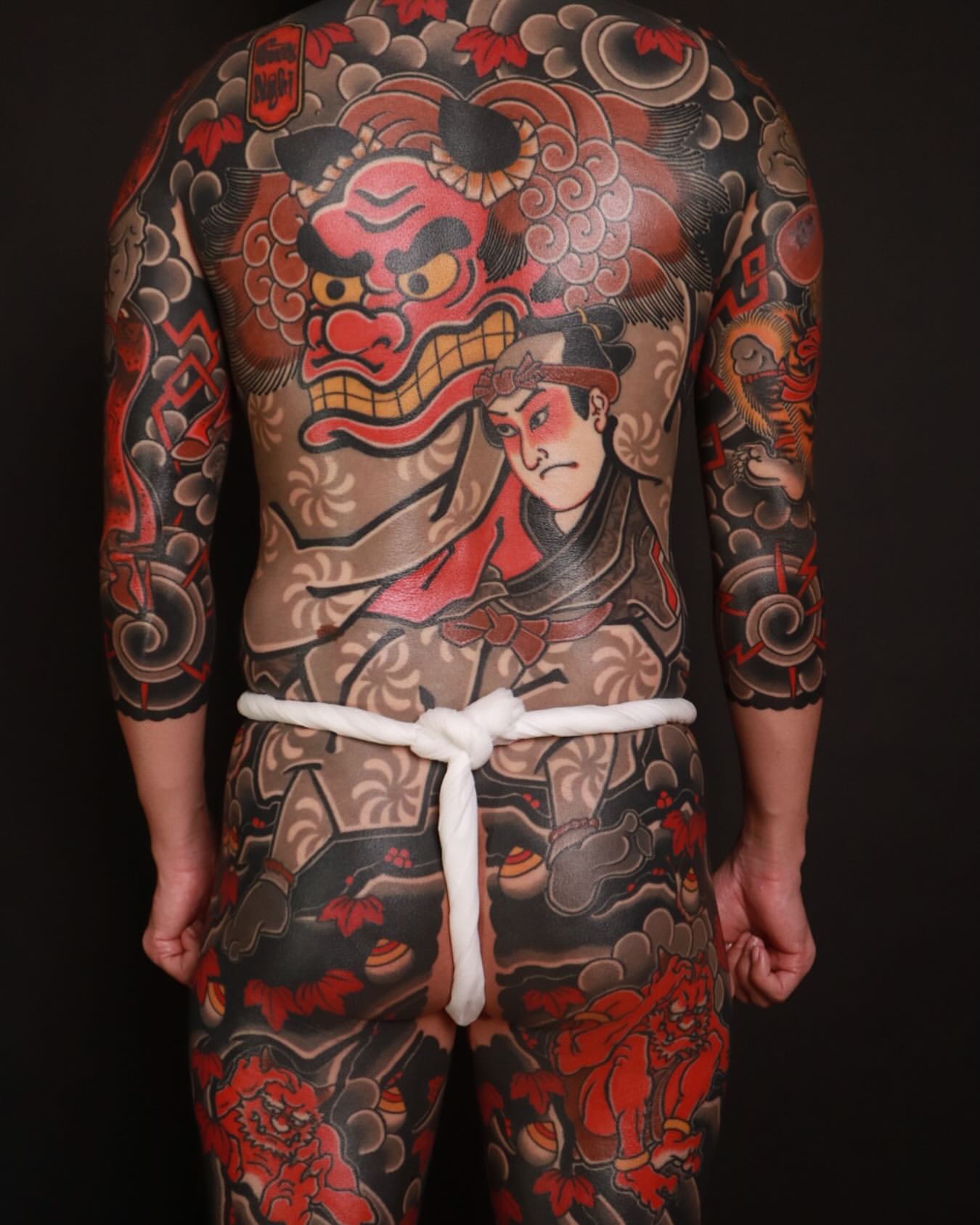
A Japanese backpiece is more than a large tattoo placed across the back.
In traditional Irezumi, the back is treated as part of one larger composition. The main subject, background, movement and negative space are designed to work together with the natural structure of the body.
For collectors considering a full back Japanese tattoo, the planning stage is just as important as the tattooing itself.
WHAT IS A JAPANESE BACKPIECE?
A Japanese backpiece is a large-scale tattoo composition developed specifically for the back.
Traditional subjects may include dragons, koi, tigers, samurai, warriors, mythological figures and Japanese folklore. These subjects are combined with background elements such as waves, wind, clouds, rocks and other traditional motifs.
The goal is not simply to fill the available skin.
A strong Japanese backpiece should create movement across the body and remain visually connected from the shoulders to the lower back.
CHOOSING THE MAIN SUBJECT
The main subject usually becomes the visual focus of the entire composition.
A dragon may create a strong sense of movement across the back. A warrior or historical figure can create a more narrative composition. Animals and folklore subjects can be developed according to the collector's personal interests and the structure of the body.
At Saigon Needle, the subject is considered together with placement, body structure and the overall direction of the project rather than treated as an isolated image.
COMPOSITION COMES BEFORE DETAIL
One of the most important principles in a large Japanese tattoo is composition.
Before focusing on small details, the artist needs to consider:
• the natural shape of the back• shoulder width• spine and body movement• placement of the main subject• direction of movement• background structure• negative space• how the tattoo may eventually connect with the arms, legs or front of the body
A strong backpiece should still feel balanced when viewed from a distance.
BACKGROUND AND MOVEMENT
Traditional Japanese backgrounds are not simply decorative elements.
Water, wind, clouds and other background structures help connect different parts of the tattoo and create movement across the body.
For example, flowing water can visually connect a figure with the lower part of the back, while clouds or wind can create movement around the shoulders.
This is one reason why Japanese large-scale tattooing requires a different approach from simply placing several individual tattoo designs next to each other.
HOW MANY SESSIONS DOES A BACKPIECE TAKE?
The number of sessions depends on the size, complexity, subject, colour, skin and the individual project.
A large backpiece is normally developed over multiple appointments rather than completed in a single session.
Long-term projects allow the artist and collector to gradually develop the composition while giving the skin enough time to recover between sessions.
The timeline should therefore be discussed during consultation rather than estimated from the size of the design alone.
EXAMPLES OF LARGE JAPANESE PROJECTS
Saigon Needle's portfolio includes several large-scale Japanese projects that demonstrate different approaches to composition.
The Zhang Shun project explores strong movement through the body and the relationship between the main figure and background.
The Mongaku project develops a Japanese bodysuit composition around the figure, water and movement of the body.
The studio also presents Japanese backpiece and large-scale projects featuring subjects such as Samurai, Kitsune and Kintaro.
These projects demonstrate how a Japanese tattoo can be developed as a connected composition rather than a collection of separate images.
STARTING YOUR OWN JAPANESE BACKPIECE
The first step is consultation.
You do not necessarily need to arrive with a finished design.
It is more useful to bring:
• subjects or stories that interest you• reference images• preferred placement• approximate size• existing tattoos that need to be considered• your preferred timeline
From there, the artist can evaluate how the idea can be developed into a composition that works with the body.
JAPANESE BACKPIECE TATTOO IN HO CHI MINH CITY
For collectors looking for a Japanese traditional tattoo in Ho Chi Minh City, Saigon Needle focuses on large-scale Irezumi, sleeves, backpieces and long-term tattoo projects.
Each project is approached as a composition designed around the individual body rather than as a collection of disconnected images.
Every project begins with a conversation.
If you are considering a Japanese backpiece, contact Saigon Needle to discuss your subject, placement, size and preferred dates.